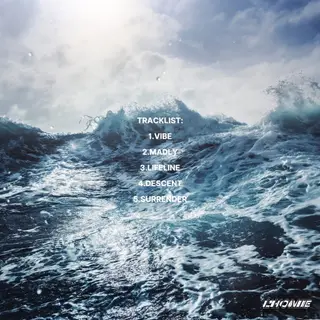
Hong Kong-born, Los Angeles-based producer L’homie returns with LIFELINE, a five-track EP landing February 27 via MP3 Records, and this one carries weight beyond a standard release cycle. It marks his first major body of work in over two years, and you can hear that time in the structure, in the restraint, and in the decisions. The EP moves through UK garage, drum and bass, dubstep, and hybrid territory, yet it never feels scattered because the framework is intentional. Four genres, four pillars, one through-line focused on identity, purpose, and the tension between clarity and chaos. Support The EP on Bandcamp here What stood out to me in this conversation is how directly the record’s mindset maps onto the music itself. L’homie talks about balancing a full-time job with studio time, about the mental noise that creeps in when you start thinking about success instead of connection, and about setting constraints so the work actually gets finished. That discipline is audible across LIFELINE. The title track locks into jump-up drum and bass momentum with precision; “Descent” leans into 140 bpm without overcomplicating the arrangement; and “Surrender” closes the arc by merging rhythmic influences in a way that feels resolved rather than forced. This is not a project built on chasing trends or stacking singles for algorithm traction. It is structured, deliberate, and thematically consistent, and that is increasingly rare in the bass space right now. With vinyl available for pre-order and the EP officially out through MP3 Records, LIFELINE reads like a recalibration. The interview below makes that clear. Interview With L’homie What distractions have the biggest impact on your ability to make your best work? My biggest distraction currently is trying to balance a job with making music. At 35, I’m not in the same place I was in my 20s where I could solely focus on the art. Now I’m constantly trying to keep both plates spinning… and sometimes, it’s exhausting. The mental space needed to create requires 100% of my focus. The other distraction, the one that’s harder to admit, is that chip on my shoulder. That voice telling me I need to prove I’m not a failure. It makes me second-guess everything. Instead of just creating, I’m thinking about how it’ll be received, whether it’s “successful enough,” and if it’ll finally show the doubters that they’re wrong. That’s the real killer. Because when I’m making my best work, like with LIFELINE, it’s when I stop chasing validation and start chasing a larger purpose. My work gets better when I remember music is supposed to be a bridge between people, not a trophy to prove something. The opportunities are rare now. And when they do come, I’m grateful. But the distraction is always there – am I doing this for the right reasons? Am I making art or am I making a case for myself? How do you protect your focus when everything around you is pulling for your attention? Honestly? I don’t always protect it well. That’s the truth. Between work and music and life, focus feels like this rare thing I have to fight for. But when I do find it, it’s usually in those quiet hours. Early mornings in my home studio where it’s just me and the music. Long walks where I can let my thoughts get loud without a thousand other things competing for space. Those in-between moments when I’m not actively making music but just sitting with it, letting questions surface without trying to immediately answer them. I’ve learned I have to be intentional about creating those spaces. Because the world isn’t going to give them to me. The job won’t. The distractions won’t magically disappear. The chip on my shoulder that tells me I need to constantly prove something – that doesn’t just go away. What helps is remembering why I started doing this in the first place. Not for validation, not to prove doubters wrong. But because music is how I make sense of things I don’t have words for. It’s that bridge between people. When I reconnect with that, I remember I’m chasing something that is greater than me. With LIFELINE, I had to stop hiding behind technical skill and genre rules and just be honest. That required focus. Protecting that focus meant I had to say no to the part of me that wanted to play it safe, that wanted to just put out another project without real thought behind it. Have you ever noticed a drop in quality when you let too much external input into your sessions? Absolutely. And it’s taken me years to recognize it. Throughout my 20s, I’d put out singles consistently without much thought to marketing or intention behind them. Just releasing for the sake of releasing. Taking in everyone’s opinions, trying to make something that would land, that would prove I wasn’t failing. And looking back, you can hear it. The work was technically solid but it lacked something deeper… It lacked me. The quality drops when I’m making music for the wrong reasons. When I’m listening to too many voices telling me what it should sound
IndustryDubstepDrum And Bass
The Creative Boundaries That Defined L’homie’s LIFELINE EP
·
Summary of the article
Hong Kong-born, Los Angeles-based producer L’homie returns with LIFELINE, a five-track EP landing February 27 via MP3 Records, and this one carries weight beyond a standard release cycle. It marks his first major body of work in over two years, and you can hear that time in the structure, in the restraint, and in the decisions.
Read the full article for more details on EDM Dance Directory News.
Share this article:
Hong Kong-born, Los Angeles-based producer L’homie returns with LIFELINE, a five-track EP landing February 27 via MP3 Records, and this one carries weight beyon...
Mentioned In This Article
Cities
Written and reviewed by our team. Technology may support research, but final content is human-authored.