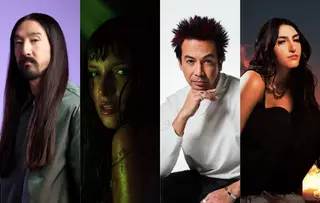
Steve Aoki is one of the most recognisable EDM stars of all time. After running Dim Mak since 1996, throwing cakes during DJ sets all around the world, and guesting in documentaries, he’s naturally crossed paths with hundreds of artists. He tapped 26 of them for remixes on HiROQUEST 3: Paragon Remixed. READ MORE: ‘I opened my mastering studio 14 months ago — here’s what I’ve learned’: Kevin Tuffy This release was the follow-up to his biggest project yet: HiROQUEST 3: Paragon, a 38-track album. Through the remix album, exciting newcomers such as Dani Thorne are named alongside modern stalwarts such as Nostalgix and seasoned veterans such as Laidback Luke. Not to mention that Aoki remixed 11 of the tracks himself or with a collaborator. In the wake of this immense body of work, MusicTech speaks to those three remixers about their technical process and their individual tracks: Play The Track (Dani Thorne Remix) What do you think makes a good remix? Dani Thorne: It depends on the original track and inspiration. Sometimes it’s playing off a melodic or bass line that is immediately noticeable or loved by fans, but with [my remix], I felt the theme was open to other possibilities. Lyric lines like “Play the track” and “Now time for the drop” could go the original way in a lighter, bouncier tone or drive you into an unworldly hard drop. I chose the latter. What are some key plugins, synths, or other pieces of gear you used to make your remix? DT: I’m a Serum girly, and have been since my dubstep days. Serum 2 is incredible and feels like the possibilities are endless. This year, for my birthday, I want to get myself an acid machine. I’m looking into the Behringer TD-3-MO-AM. Tracks in your discography like That’s My Name have a spacey quality to them, similar to the original version of Play The Track. Why did you opt to make your remix full-throttle hard techno? DT: My original version of this remix was actually more like That’s My Name. Steve asked me to make him a 140bpm melodic techno track, and I wanted to make something that he would be happy to play. Tech house and melodic techno have a clear bridge that makes them very similar, but in the end, I didn’t want to deliver the same track just a little faster. Not to mention, it was a major key, and I prefer to write in minor because of the tone it sets. It’s like heaven or hell, light side or dark side, and you’re talking to 2026 Dani. The sonic journey I’m on is hard and punishing. While I did love my first version, it wasn’t something that would fit into my sets. Dani Thorne. Image: Press Hard techno is a thriving genre at the moment. What are some general tips you have for producing those towering kicks and high-pitched synth stabs that define the sound? DT: I’m not going to act like I’m some kick master; I’m constantly experimenting and growing through trial and error. One note I used to get a lot of on my demos from peers was: “The writing is great, but the kicks aren’t hitting hard enough”. So with every track, I’m trying something new. The kicks on this remix were layered to the heavens. From a production planning standpoint, I almost always start with the drums. If I can get a solid feeling and energy from just drums, I know we’re in a great place. They are also the backbone of differentiating sub-genres. Then that usually inspires my writing. Flashing Lights (Nostalgix Remix) What do you think makes a good remix? Nostalgix: A good remix is all about balance. You want people to recognise the core of the record, but also feel like they’re hearing it in a whole new way. A remix should keep the essence of the original record, while amplifying the energy. I love taking my favourite parts from the original and adding my sound to it to give it a whole new light. What are some key plugins, synths, or other pieces of gear you used to make your remix? N: I mainly used Serum for sound design on the drops. It’s my go-to synth because it gives me a lot of flexibility when building aggressive but controlled bass sounds. I used Omnisphere and Serum in the breakdowns to pair with the original melody. Omnisphere is another one of my favourite plugins, especially when it comes to creating atmosphere in a record. Some other plugins I used are FabFilter Pro-Q 3 for mixing and Valhalla VintageVerb for reverb. Steve Aoki’s original track uses pretty and glowing melodic lines. In your remix, you directly borrow those for the interludes, but you recreated the drops. Did you sample the melodic lines from the original and morph them into your drops? N: The original melody of Flashing Lights is what initially drew me to the record. When I started playing around with ideas, I knew I wanted to keep the core melody. I began by taking the melody from the original stems and experimenting with ideas for the drop. I used Serum for a lot of the drop synths. I’m big on layering, so I layered multiple synths to make the drop feel full. Once I had the core ideas down and the drop was feeling
IndustryTechnoHouse
How we remixed Steve Aoki: Tips from Laidback Luke, Dani Thorne and Nostalgix
Summary of the article
From hard techno to upbeat house, three producers talk through their production techniques and creative choices for Aoki’s HiROQUEST 3: Paragon Remixed The post How we remixed Steve Aoki: Tips from Laidback Luke, Dani Thorne and Nostalgix appeared first on MusicTech.
Read the full article for more details on EDM Dance Directory News.
Share this article:
From hard techno to upbeat house, three producers talk through their production techniques and creative choices for Aoki’s HiROQUEST 3: Paragon Remixed The post...
Written and reviewed by our team. Technology may support research, but final content is human-authored.