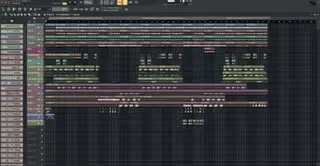
“TIKINI” gives Tavo Man a clear lane to connect Garifuna language, Afrobeat, dancehall, and contemporary club production in one record. The track is rooted in cultural meaning, but the production keeps it direct, rhythmic, and ready for movement. That balance is the real hook here, because the song works as a cultural statement and a physical record at the same time. Tavo Man’s wider work has always moved between music, identity, and visual art, and that comes through in the way “Tikini” is built. The vocal sits at the center, with the rhythm and bass supporting the sensual, hypnotic feel of the track. The production choices are polished without stripping away the warmth and character that make the song feel personal. For this How It Was Made feature, Tavo Man breaks down the exact tools behind the track, from Fairchild-style vocal compression to MASCHINE, BATTERY, Serum, HEAT UP 3, reverb chains, delays, and his hybrid Cubase and FL Studio workflow. The result is a practical look at how he shaped the drums, vocals, low end, and atmosphere behind “Tikini,” while keeping the focus on groove, clarity, and feel. Main Plugin: Fairchild 670 Compressor The Fairchild 670 Compressor is a classic tube-based compressor known for its warm, smooth, and musical character. It doesn’t just control dynamics—it adds a rich harmonic color that enhances the tone of whatever you run through it. This plugin is especially loved for vocals because it brings a natural compression that feels transparent yet full of life. Its unique response and vintage vibe make it perfect for achieving a timeless, high-end sound. One of the strongest elements in my track “Tikini” is the vocal production—the color, the sensuality, and the smoothness were not accidental. I used the Fairchild 670 on a vocal bus as a parallel compressor to shape the main vocals. With a subtle EQ touch and careful gain reduction, I was able to enhance the warmth without over-compressing. I didn’t rely heavily on presets; instead, I fine-tuned the settings to keep the vocals dynamic but controlled. The result was a sweet, pleasing sound that sits perfectly in the mix and doesn’t fatigue the listener. For producers working in similar genres, I highly recommend using the Fairchild 670 as a parallel compressor on vocals rather than directly inserting it aggressively. Keep the settings subtle—this plugin shines when it’s barely noticeable but still adding character. One trick I’ve learned is to blend it slowly into your mix until the vocals feel fuller and more intimate. It’s perfect for achieving that smooth, sensual vocal tone without losing clarity or emotion. MASCHINE / BATTERY (Native Instruments) MASCHINE and BATTERY by Native Instruments are powerful drum production tools designed for creating dynamic and expressive rhythms. BATTERY is especially known for its advanced sample layering, precise control over velocity, and detailed shaping options like envelopes and filters. MASCHINE, on the other hand, combines sequencing and performance, making it easy to build grooves in a very musical and hands-on way. Together, they offer a flexible workflow that’s perfect for modern beat production. For the instrumental base of “Tikini,” I used MASCHINE and BATTERY to build the core Afrobeat rhythm. These libraries have been with me throughout my career, so I know how to get the exact groove and bounce I’m looking for. I selected percussive kits with organic textures and layered them to create a rich rhythmic foundation. I also adjusted velocity and swing to give the drums a more human feel, and added light processing like EQ and saturation to enhance the groove. The goal was to create a rhythm that feels alive, natural, and deeply connected to the Afrobeat style. For producers working in Afrobeat or similar genres, MASCHINE and BATTERY are great tools for building authentic grooves. One key tip is to focus on groove and swing rather than perfection—slight imperfections make the rhythm feel more human. Try layering different percussion sounds and playing with velocity to create movement. Over time, I’ve learned that less is more—if the groove feels right, you don’t need to overcomplicate it. LX480 Reverb / RAUM / Replika / EchoBoy / AIR Ether Screenshot The LX480 Reverb is a high-quality emulation of a classic digital reverb unit, known for its lush, spacious, and smooth tails. RAUM by Native Instruments offers a more modern and creative approach to reverb, with versatile algorithms that can go from subtle ambience to deep atmospheric textures. Replika is a delay plugin that adds depth and rhythmic space, while EchoBoy by Soundtoys is widely respected for its warm, analog-style delay character. AIR Ether, on the other hand, is perfect for adding high-frequency air and sparkle, especially useful for enhancing textures and vocal details. To create depth in “Tikini,” I used the LX480 mainly on instruments like guitars to give them space and a smooth ambient feel. For vocals, I combin
IndustryBreaksAde
How It Was Made: Tavo Man – Tikini (G.A Prod + Afrobeat)
·
Summary of the article
“TIKINI” gives Tavo Man a clear lane to connect Garifuna language, Afrobeat, dancehall, and contemporary club production in one record. The track is rooted in cultural meaning, but the production keeps it direct, rhythmic, and ready for movement.
Read the full article for more details on EDM Dance Directory News.
Share this article:
“TIKINI” gives Tavo Man a clear lane to connect Garifuna language, Afrobeat, dancehall, and contemporary club production in one record. The track is rooted in c...
Written and reviewed by our team. Technology may support research, but final content is human-authored.