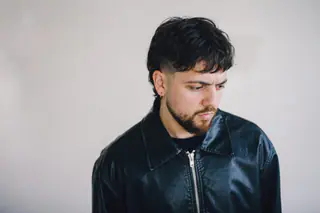
There’s a difference between building momentum and building something that lasts, and that difference usually shows up when you start talking about energy. Not hype or visibility but actual internal energy – the kind that determines how long you can do this without burning out. In this conversation, CAY opens up about what he had to learn the hard way, from navigating early set pressure in 2017 to understanding that reading a room matters more than sticking to a perfectly planned USB. He talks about sustainability as something deeper than career pacing. For him, it’s about developing a musical identity that can’t be copied, letting go of ego, and continuing to experiment without getting stuck in one lane. That mindset runs parallel to his debut album Another Life, landing in January 2026 via HABITAT, the label helmed by Mind Against. The album steps beyond peak-time functionality and into something more personal. CAY introduces his own vocals, pulls from years of private writing, and trims more than 60 sketches into a focused 10-track statement. Tracks like “Run Away” hint at internal tension and vulnerability, while others balance dancefloor structure with introspection. In this interview, he breaks down pressure, time off, pacing a decade-long career, and why the people in front of you will always tell you what you need to know. Interview With Cay What have you had to learn the hard way when it comes to managing your energy as a DJ? Hey, what’s up? uh — a lot. There were so many moments of learning. It starts with structure: when do I play, when am I allowed as a DJ to plug in my USB after the DJ before me, and can I play my usual slower set after someone who just played 132 BPM in a time slot where the standard is more like 122? I had my first show in 2017, and since then, I’ve learned a lot. But one thing especially: always look forward and observe the people. The people in front of you reflect the mood, and that reflection understands and guides you through the set. At the beginning, you prepare a lot and think everything will work out — but 99% of the time, you have to react spontaneously because the vibe changes. That’s something you can’t really learn; you have to feel it. How do you personally define “sustainable” when it comes to your career—emotionally, financially, or creatively? I think sustainability means developing your own style as a musician — something that isn’t copyable, so you stay visible over time. Emotionally, it’s important to pack away your ego and always remember why you’re doing this: because you love music. When you hold onto that, you quickly forget about other people’s opinions and expectations. Creatively, it’s important for me to keep learning and always try something new. There’s nothing more boring to me than building the same style for decades. Today breakbeat, tomorrow maybe jazz — who knows. What’s something you used to say yes to that you’ve learned to say no to now? Saying yes is very valuable — whether in music or in life. But sometimes you have to say no to a show or an opportunity because your heart feels that something isn’t right. You shouldn’t worry about that, and you have to stand behind your decision. When one door closes, another one will open somewhere else. How do you recharge in between shows or tours in a way that feels real, not performative? I think having a home, a partner, family, and really good friends helps a lot and keeps you grounded. And no matter what happens, I always have music. I honestly believe nothing in life relaxes me as much as the grey of Ableton. Have you ever felt pressure to match the pace of others in the scene? How did you handle it? I think pressure is always there. I function very well under pressure, but of course, it can be exhausting when too many things happen at the same time. I think you have to let go and see pressure more as a driving force — as an opportunity — and reframe it in your head, putting it in a different light. What’s your relationship with time off—can you take it guilt-free? Yes and no. Music is my break and at the same time my work. It’s a blessing and a curse, because you rarely find real rest from creativity. So somehow yes, and somehow no. If someone asked you how to pace themselves for a decade-long career, what would you actually say? Enjoy it. Everyone has all the time in the world — everything is fine. I know it’s hard, but no matter how long it takes, always remember what a good time you’re having with music. Then time flies. Whether it takes one year or twenty years doesn’t matter. Enjoy it and create something The post How CAY Learned to Pace Himself in a Scene That Never Slows Down appeared first on Magnetic Magazine.
IndustryBreakbeatBreaks
How CAY Learned to Pace Himself in a Scene That Never Slows Down
Summary of the article
There’s a difference between building momentum and building something that lasts, and that difference usually shows up when you start talking about energy. Not hype or visibility but actual internal energy – the kind that determines how long you can do this without burning out.
Read the full article for more details on EDM Dance Directory News.
Share this article:
There’s a difference between building momentum and building something that lasts, and that difference usually shows up when you start talking about energy. Not ...
Written and reviewed by our team. Technology may support research, but final content is human-authored.